- All
- Product Name
- Product Keyword
- Product Model
- Product Summary
- Product Description
- Multi Field Search
English


| Quantity: | |
|---|---|
1000L
Longjun
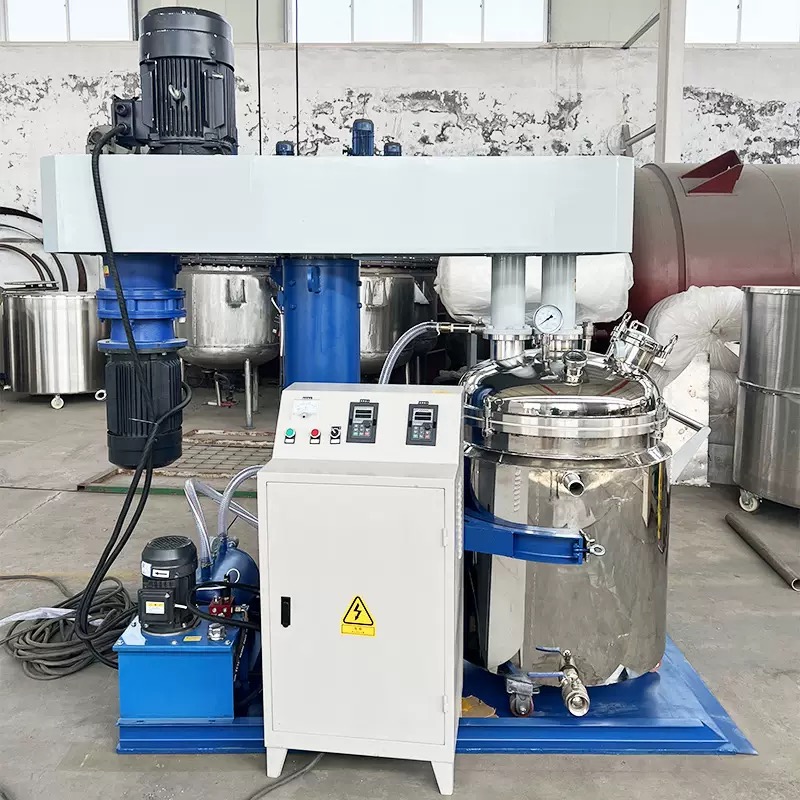
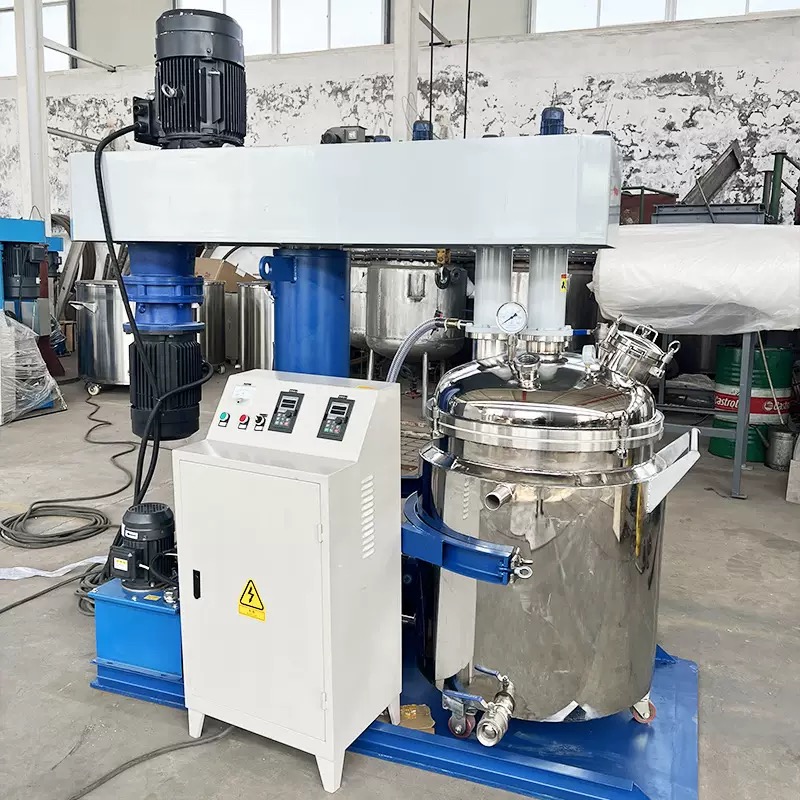
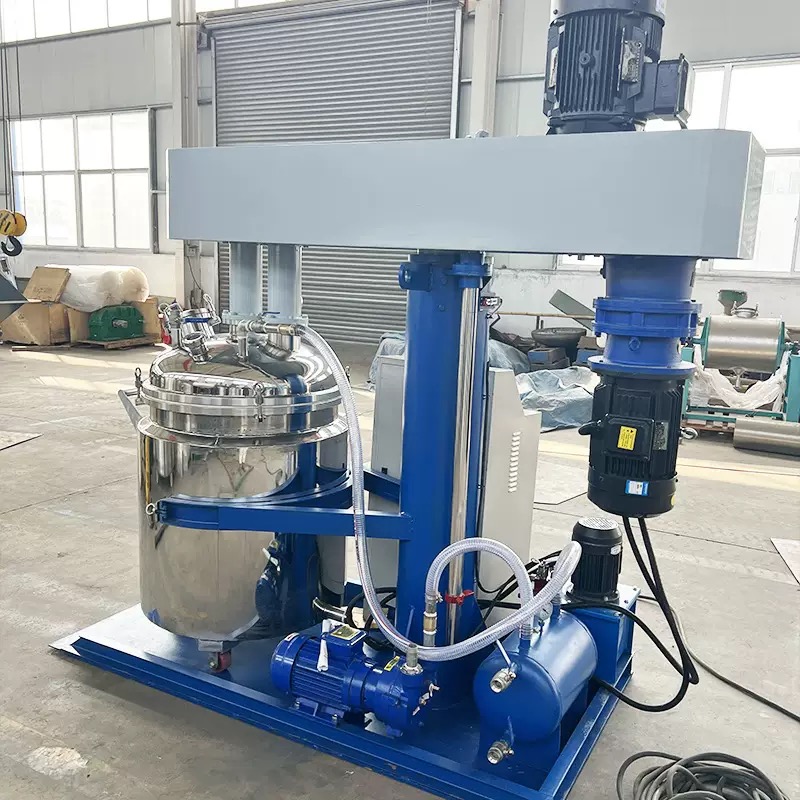
The Concentric Biaxial Vacuum Disperser (also named concentric dual axis vacuum mixer disperser) is a professional-grade industrial processing equipment, engineered for high-efficiency liquid-solid wet dispersion, grinding, stirring, homogenization, mixing and dissolution of multi-type materials. This vacuum sealed disperser is tailor-made for large-scale continuous production lines, delivering stable and precise processing performance for demanding industrial production scenarios, and fully adapts to batch and continuous production modes.
This high shear vacuum disperser adopts an advanced concentric biaxial structure, integrating a low-speed mixing shaft and a high-speed dispersing shaft that operate synchronously without interference. Driven by the high-speed rotating rotor, the material is fed from the upper and lower feeding areas of the working head and sucked into the working chamber axially. The strong centrifugal force throws the material radially into the narrow precision gap between the stator and rotor, where the material is subjected to centrifugal compression, liquid layer friction and hydraulic impact to complete initial dispersion. The closed vacuum environment effectively eliminates air bubbles during processing, avoiding material oxidation and ensuring a bubble-free finished product with uniform texture.
Parameter | Standard Specification | Customizable Range |
Model | 1000L | 5L – 5000L |
Working Capacity | 1000L | Customized per production demand |
Full Capacity | 1600L | Matched with working volume |
High Speed Dispersing Shaft Speed | 0-1500rpm | Adjustable via frequency inverter |
Low Speed Mixing Shaft Speed | 0-60rpm | Customizable for specific materials |
Vacuum Degree | -0.09MPa | Up to -0.098MPa |
Contact Material | SS304 | SS316L, carbon steel optional |
Lifting System | Hydraulic lifting | Pneumatic lifting optional |
The self-concentric coupling structure ensures perfect concentricity of the upper and lower dispersing shafts, eliminating abnormal vibration and shaft bending risks during high-speed operation, while retaining the advantage of easy disassembly, replacement and maintenance of the split shaft design.
The fully sealed vacuum chamber effectively isolates materials from air, avoiding oxidation and bubble generation, which significantly improves the smoothness, uniformity and stability of the final product, especially critical for high-quality ink coating production.
Equipped with a frequency conversion control system, the equipment can adjust the speed of dual shafts independently, adapting to different material viscosities and processing technologies, meeting diversified industrial production needs.
This concentric dual axis vacuum disperser is widely used in multiple industrial sectors, including coatings, dyes, pigments, paints, inks, adhesives, resins, cosmetics, papermaking, food, rubber and plastic, composite materials, insulation materials, and magnetic materials. It is also the ideal processing equipment for lithium-ion battery slurries, electronic electrode slurries and other high-precision electronic material production.
Place the equipment on a horizontal concrete foundation, fix it with anchor bolts, and ensure the levelness of the equipment body is within 0.5mm/m. Check all sealing components and fasteners before installation.
Close the feeding port and chamber lid first, start the vacuum system to reach the set vacuum degree, then start the low-speed mixing shaft first, followed by the high-speed dispersing shaft. Stop the equipment in reverse order after processing.
Regularly check the concentricity of the dual shafts and the wear condition of the sealing parts; replace the lubricating oil every 3 months, and clean the stator and rotor working head after each batch of production to avoid material residue.
We offer standard SS304 material for the contact parts, with SS316L for corrosive materials and food-grade materials, as well as carbon steel for general industrial use, all customizable per your production requirements.
Yes, the dual-shaft synchronous design allows the equipment to handle materials with a wide viscosity range, from low-viscosity liquids to high-viscosity pastes, with adjustable speed to match different material properties.