
- All
- Product Name
- Product Keyword
- Product Model
- Product Summary
- Product Description
- Multi Field Search
English

Views: 0 Author: Site Editor Publish Time: 2026-05-06 Origin: Site
Scaling mixing operations requires more than just scaling bowl capacity. It requires the right kinematic action to ensure batch-to-batch consistency. Buying a larger bowl will rarely solve texture variations or unpredictable product yields. We recognize the Planetary Mixer as the absolute industry standard. It easily handles versatile, multi-purpose mixing across the food, chemical, and pharmaceutical sectors. Its distinct mechanical motion clearly sets it apart from standard agitators. This guide bridges the gap between basic mechanical principles and bottom-of-funnel procurement criteria. We will help operational leaders choose the exact configuration for their production line. You will discover how to align equipment capabilities directly with your manufacturing goals. We will evaluate core mechanics, compare industrial variations, and explore full system integration.
Kinematic Efficiency: Planetary mixers utilize simultaneous rotation and revolution, with advanced models achieving full-batch material contact in as few as 36 revolutions.
Application Versatility: Unmatched for aeration and varied product lines, though highly specialized applications (like continuous heavy dough) may require alternatives.
Scalability: Configurations range from 5-quart commercial kitchen models to heavy-duty industrial dual-axis units capable of processing high-viscosity materials.
Workflow Impact: Upgrading from fixed to removable bowl systems can yield a 50% to 100% increase in production throughput by enabling parallel workflow staging.
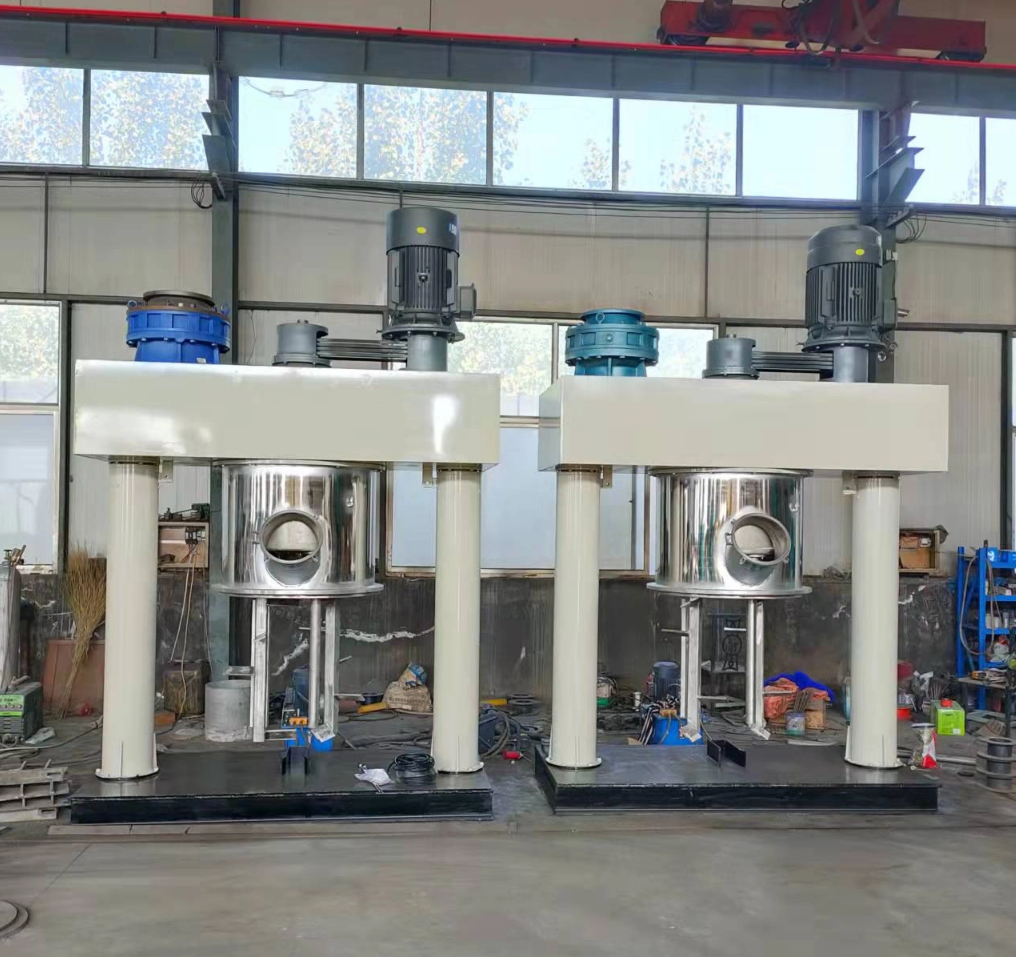
You must understand the unique kinematics to appreciate this equipment. The agitator rotates rapidly on its own vertical axis. Simultaneously, it travels, or revolves, around the fixed perimeter of the mixing bowl. This dual motion closely mimics how planets orbit the sun.
This specific mechanical action delivers a crucial operational outcome. It systematically eliminates mixing blind spots and dead zones along the vessel walls. Traditional single-axis agitators often leave unmixed materials clinging to the bowl. Operators using older equipment must frequently stop the machine. They then manually scrape the bowl edges to ensure homogeneity. The planetary trajectory inherently prevents this issue. The sweeping path forces materials from the edge back toward the center. This drastically reduces manual intervention and increases your active production time.
These units excel at altering fluid dynamics through intense physical agitation. The planetary action proves highly efficient at air incorporation. The rapid crossing paths of the beater physically fold ambient air into the material matrix.
This physical effect makes the equipment ideal for processing batters, creams, meringues, and emulsions. You achieve maximum volume and light textures rapidly. We often see operators rely on specific wire whisk attachments to maximize this aeration. However, you must carefully monitor mixing times. Delicate structural matrices, like heavy cream, can quickly break down if you over-aerate them. Controlling the speed settings allows you to dial in the exact air incorporation required for your recipe.
Industry baseline metrics help us clearly quantify this mixing efficiency. We do not rely on vague terms like "thorough blending." Instead, we measure physical contact rates based on agitator revolutions.
1 Revolution: The agitator sweeps the entire outer boundary of the bowl once.
3 Revolutions: The mixing blades actively fold and process the majority of the material.
36 Revolutions: The agitator achieves virtually 100% batch contact.
These metrics demonstrate incredible efficiency. An advanced machine operating at moderate speeds can reach 36 revolutions in mere seconds. This guarantees uniform distribution of active ingredients or trace additives.
Commercial bakeries and commercial kitchens rely heavily on standard single planetary models. These units typically range in capacity from 5 to 140 quarts. They feature a single agitator shaft executing the classic orbital motion.
Their true value lies in the interchangeable hubs and attachments. Operators swap out dough hooks, wire whisks, and flat beaters depending on the daily recipe. Many models also include a front auxiliary hub. You can attach prep tools like meat grinders, cheese slicers, or vegetable shredders. This transforms a simple blending machine into a comprehensive food preparation station. We recommend these models for facilities managing highly diverse product lines.
Industrial applications involving high viscosity demand a more robust design. Double planetary mixers feature two separate blades. Both blades rotate on their own individual axes. They simultaneously orbit a common central axis inside the vessel. As they cross paths, they physically shear and knead dense materials.
These heavy-duty machines master high-viscosity use cases. You will routinely find a silicone sealant dual planetary mixer operating in advanced chemical plants. They handle incredibly heavy adhesives, dense battery slurries, and viscous industrial pastes. Standard agitators simply stall in these dense materials. The dual blades pull the heavy paste apart and fold it back together, ensuring absolute material consistency without burning out the motor.
Certain specialty products cannot tolerate trapped air bubbles. Precision research and development labs, as well as pharmaceutical manufacturers, require vacuum-enabled configurations. These units seal completely and draw a deep vacuum during the agitation cycle.
Using a laboratory planetary vacuum mixer ensures simultaneous mixing and degassing. The vacuum pulls entrapped air voids out of the fluid matrix. Removing these micro-bubbles ensures the structural integrity of the final product. We see this widely used when preparing medical-grade ointments, dental composites, or specialized electronic coatings. Voids in these products could cause catastrophic failure upon application.
Facility managers often debate between planetary and spiral architectures. We view this as a choice between versatility and specialization.
Planetary machines serve as the "all-purpose" solution. They offer broad lateral capabilities across completely different material states. You can whip cream in the morning and mix muffin batter in the afternoon. However, this versatility carries a specific risk. They can easily cause overworking or overheating when processing very stiff, heavy bread doughs.
Spiral mixers represent the "deep-focus" solution. The mixing bowl itself rotates while the spiral arm remains fixed in one location. This gentle, specialized action focuses entirely on developing gluten structures. They process massive batches of artisan bread or pizza dough flawlessly. They cannot, however, whip cream or shred vegetables.
When assessing pure dough production, spiral models offer distinct performance advantages. We look closely at thermal control and water absorption metrics.
Thermal Control: Spiral models maintain significantly lower friction temperatures during operation. They gently knead the mass rather than aggressively tearing it. This prevents premature yeast fermentation.
Absorption and Yield: Spiral machines effortlessly handle 80% to 90% water absorption ratios. This creates lighter, more digestible artisan breads.
Development Speed: A dedicated spiral unit can reduce dough development time by 20% to 30%. This efficiency directly lowers overall raw material costs over time.
Below is a quick reference chart comparing the core traits of both systems.
Feature | Planetary Mixers | Spiral Mixers |
|---|---|---|
Core Strength | Unmatched versatility and aeration | Specialized heavy dough development |
Bowl Movement | Fixed bowl, moving agitator | Rotating bowl, fixed agitator axis |
Thermal Impact | Higher friction; risk of overheating heavy mass | Low friction; preserves yeast integrity |
Ideal Materials | Batters, creams, fillings, varied recipes | Artisan breads, bagels, pizza bases |
Selecting the right size requires looking beyond your current daily volume. Benchtop units perfectly suit R&D labs or small batch testing. Floor-standing models anchor mass production lines.
A proven industry rule of thumb dictates buying for projected growth. If your current demand requires a 40-quart bowl, an 80-quart footprint might make better long-term sense. We often see buyers regret undersizing their equipment. You must also measure your actual floor space. Floor-standing models require ample clearance for operators to maneuver heavy ingredient bags and maintenance carts.
The bowl architecture drastically impacts your daily workflow. Fixed bowls require a lower initial equipment investment. They maintain a very compact footprint. The drawback lies in difficult ergonomics. Operators must manually cut and scoop heavy batches out of the fixed vessel. This slows down production and strains workers physically.
Removable bowls demand a higher upfront investment but unlock parallel processing. An operator can prep and load Bowl B at a staging station while Bowl A is actively mixing. This simple workflow staging increases overall throughput by 50% to 100%. Furthermore, removable bowls integrate seamlessly into automated material handling ecosystems. You can roll them directly into automated bowl lifters and tippers. This integration sharply reduces workplace injury risks.
You must evaluate the internal power transmission system before finalizing a purchase. The drive system dictates noise levels, torque output, and maintenance schedules.
Gear-driven systems deliver maximum torque directly to the agitator. They easily push through dense, heavy loads without stalling. However, gear systems require strict lubrication maintenance routines to prevent mechanical failure. Belt-driven models offer significantly quieter operation. They feature simpler maintenance protocols. You should note they carry distinct slip-risk profiles. If you overload a belt-driven unit, the belt may slip rather than power through the dense mass.
You should never view these mixers as isolated, standalone units. We position them as critical nodes within a continuous processing line. System ecosystem mapping ensures every piece of equipment communicates and transfers material smoothly. Poor integration creates severe production bottlenecks.
Your mixing phase relies heavily on upstream preparation. If upstream systems fail, the mixer processes flawed material.
Thermal Management: Ingredient chillers and automated water meters prove vital. They regulate input temperatures precisely, preventing premature chemical reactions or yeast activation.
Material Handling: Automated dosing systems pull directly from bulk flour or powder silos. This guarantees exact recipe proportions before the agitation cycle even begins.
Sifting: Inline sifters remove physical contaminants and break up compacted powders before they enter the vessel.
Once the material achieves optimal homogeneity, downstream systems take over. Smooth transfer protocols preserve the structure you just developed.
Portioning: Dough dividers, rounders, and automated extrusion lines portion the bulk mass into manageable units.
Baking and Curing: Products travel through proofing chambers or massive tunnel ovens.
Finishing: Cooling conveyors lower product temperatures before they reach automated weight-inspection and packaging machines.
Scaling a production facility demands precise equipment alignment. A planetary mixer remains the optimal choice for operations prioritizing product variety, rapid aeration, and high-viscosity processing. It outpaces specialized units when a single factory line must produce varied recipes. You benefit immensely from parallel workflow staging when you upgrade to removable bowl architectures.
Before moving forward, we advise taking specific actionable steps. First, conduct a physical material test, or proof-of-concept run, with your chosen manufacturer. This validates the equipment against your specific recipe. Next, carefully audit your floor space to ensure removable bowl logistics fit your layout. Finally, finalize your upstream ingredient staging plans before you submit a formal request for quotation.
A: Standard single-axis models effectively handle materials up to roughly 100,000 centipoise. When scaling into extremely dense materials, operations transition to double planetary designs. These robust industrial units easily manage high-viscosity mixtures reaching several million centipoise. They effortlessly slice through heavy adhesives, dense caulks, and thick battery slurries without stalling the drive motor.
A: Fixed-bowl models require dedicated manual washdowns. Because you cannot detach the bowl, standard automated Clean-In-Place (CIP) systems face limitations reaching every internal crevice. Operators must physically scoop out residual products and manually scrub the interior walls. Routine maintenance also involves greasing the planetary gear hub to ensure smooth, quiet operation.
A: Yes, many commercial and industrial models support scrape-surface agitators. Manufacturers provide specialized blades fitted with Teflon or UHMW (Ultra-High Molecular Weight) polyethylene edge scrapers. These flexible edges constantly wipe the inner walls of the bowl during rotation. They prove highly effective for processing sticky materials and improving internal heat transfer.
A: Any industrial model must feature interlocking safety guards around the mixing zone. If an operator opens this guard, the machine must immediately stop rotating. Standard features also require emergency stop buttons placed within immediate reach. Furthermore, heavy-duty units utilize two-hand lowering controls to keep operators safely away from moving parts during bowl descent.


