
- All
- Product Name
- Product Keyword
- Product Model
- Product Summary
- Product Description
- Multi Field Search
English

Views: 0 Author: Site Editor Publish Time: 2026-03-23 Origin: Site
While the fundamental physics of tumbling a cylinder seem simple, Ball Mill operations represent the most energy-intensive and financially sensitive bottleneck in industrial material processing. Mechanical energy conversion in standard pulverization is notoriously low. It often hovers between a mere 5% and 20%. The rest dissipates as unused heat and noise. Therefore, choosing the right configuration is less about achieving basic pulverization. It is more about minimizing catastrophic OPEX through energy control and media wear management over a 20-year lifecycle.
We move beyond basic textbook definitions to provide a commercial and engineering evaluation framework. You will explore equipment mechanics, operational economics, and critical system sizing criteria. We guide technical buyers, plant managers, and procurement teams through the nuances of heavy equipment selection. You will learn how to match mechanical constraints to your specific plant realities. Selecting the right design parameters ensures you prevent crippling operational bottlenecks down the line.
Operational Reality: Effective grinding requires hitting a precise "critical speed"; going too fast causes internal media to centrifuge, halting the grinding process entirely.
Economic Weight: The grinding circuit typically consumes 40–70% of total plant energy and accounts for up to 60% of processing CAPEX.
Media Dictates Outcomes: Selection of grinding media (size, density, and material) must match the feed material's hardness and chemical sensitivity to prevent contamination.
Efficiency Baseline: Optimal performance usually occurs at a 33% media fill rate and a 50% total volumetric fill rate.
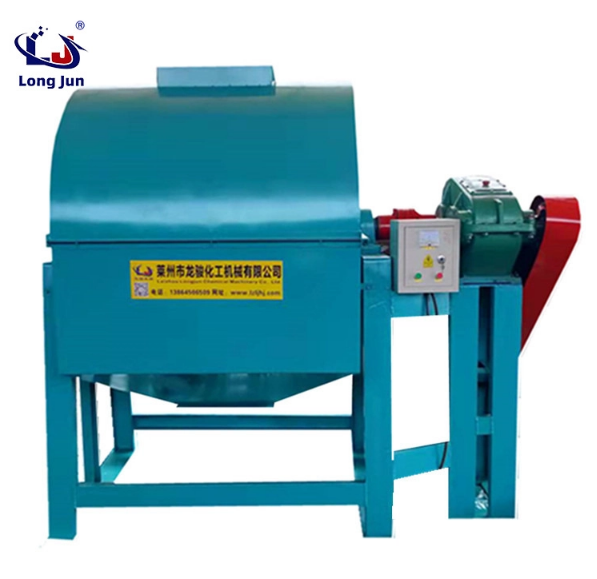
Understanding the internal physical forces of your equipment helps you optimize daily operations. At its core, the machine rotates a large, horizontally mounted steel cylinder. Inside this drum, heavy grinding media cascades downward. This movement applies immense physical force to the incoming material. We can break down this continuous size reduction process into three core operational stages.
Material Feeding: Raw material enters continuously through a specialized 60° cone inlet. This angle ensures steady volumetric flow into the crushing zone.
Active Cascading: The drum rotates, lifting both the material and the heavy grinding media. Gravity pulls them down in a continuous tumbling action.
Material Discharge: The processed powder exits through a 30° cone at the opposite end. This gentler slope controls the retention time inside the chamber.
Inside the rotating drum, two distinct physical mechanisms govern the size reduction process. The first is impact force. Impact provides the heavy, downward crushing action. When metal or ceramic balls drop from the upper section of the drum, they smash into coarse incoming particles. This raw force breaks larger rocks and agglomerates into smaller fragments. The second mechanism is attrition. Attrition refers to the localized friction occurring between individual media balls and the drum lining. As these surfaces rub together, they shear the edges off smaller particles. Attrition drives the material down to uniform, fine-mesh sizes.
Operators must master the concept of critical speed to maintain these forces. Critical speed defines the theoretical rotational velocity where centrifugal force pins the grinding media to the inner drum wall. If the drum rotates too slowly, the media merely slips and slides along the bottom. This sliding wastes energy and halts pulverization. Conversely, if the drum rotates too fast, centrifugal force takes over. The media sticks to the wall, dropping grinding efficiency to exactly zero. Facilities install Variable Speed Drives (VSDs) to solve this problem. A VSD allows you to dial in the perfect rotational speed. You keep the media cascading efficiently regardless of fluctuating load weights.
Plant engineers often face confusion when shortlisting size reduction equipment. The term grinding mill acts as a broad umbrella category in industrial processing. It includes varied equipment like rod mills, SAG (Semi-Autogenous Grinding) mills, and vertical roller mills. A ball mill belongs to this family but specifically utilizes spherical media for fine reduction tasks. Other tumbling mills might use steel rods, mixed media, or even the raw ore itself to crush the material.
Cross-industry terminology also creates frequent purchasing mix-ups. Traditional CNC milling machines and industrial tumbling mills share the word "mill" but perform entirely opposite functions. A CNC milling machine operates in discrete manufacturing. It uses rapidly rotating cutting tools to shape solid metal blocks into specific parts. In contrast, bulk processing mills rely on cascading gravity. They pulverize loose, raw materials into fine powders. You do not use cutting blades; you use blunt force trauma.
Equipment Type | Primary Mechanism | Media Used | Typical Application |
|---|---|---|---|
Industrial Ball Mill | Gravity cascading and attrition | Spherical balls (steel, ceramic) | Fine powder reduction (bottom-stage) |
Rod Mill | Line-contact crushing | Long steel rods | Coarse, primary grinding |
SAG Mill | Autogenous impact | Large steel balls + raw ore | First-stage massive rock reduction |
CNC Milling Machine | High-speed rotary cutting | Carbide cutting end-mills | Precision metal part manufacturing |
Equipment buyers choose this specific technology for its aggressive reduction ratios. Standard crushers manage ratios of perhaps 6:1 or 10:1. In contrast, these heavy-duty tumblers achieve reduction ratios ranging from 60:1 to 70:1. This aggressive capability makes them the definitive choice for bottom-stage pulverization. You deploy them at the end of the crushing circuit to achieve final product fineness, rather than using them for primary rock breaking.
You cannot evaluate heavy grinding equipment without examining direct financial metrics. The grinding operation acts as the primary power draw for the entire facility. Grinding operations routinely demand up to 90% of the entire crushing circuit's energy budget. Consumables also drain operating capital aggressively. Wear parts, particularly forged steel balls and internal armor liners, consume roughly 30% of standard plant material budgets. You must account for these ongoing OPEX realities before finalizing a machinery purchase.
Engineers evaluate system success using a specific diagnostic Key Performance Indicator (KPI): the "-200 mesh utilization" metric. Traditional managers often measure success simply by "tons per hour" passed through the machine. This volume-based approach creates a false sense of efficiency. Passing material quickly means nothing if the output remains too coarse. The -200 mesh utilization metric tracks the specific energy cost required to generate new, in-spec fine powder per unit of volume. It tells you exactly how many kilowatts you burn to create profitable, finished material. Tracking this KPI helps you spot worn liners or incorrect slurry densities long before output quality completely collapses.
Plant designers must also navigate the physical limits of equipment scale. You face diminishing returns on scale as drum diameters increase. Efficiency gains drop significantly once drum diameters exceed approximately 4 meters (13.1 feet). Beyond this diameter, the internal trajectory of the cascading media becomes less predictable. Energy dissipation increases rapidly. This engineering limit heavily influences facility design. You must decide whether to buy one massive unit to save floor space or install two parallel mid-sized units. Parallel units often deliver superior total efficiency and provide critical redundancy during maintenance shutdowns.
Selecting the optimal configuration requires a vendor-neutral evaluation of your specific material handling needs. The first major decision involves choosing between wet and dry environments. Wet milling offers lower power consumption overall. It completely eliminates airborne dust, creating a safer operator environment. However, wet operations require strict control over slurry densities. Your ideal solid-to-liquid ratio should remain tightly constrained between 65% and 80%. Conversely, dry milling is mandatory for moisture-sensitive products. You also deploy dry systems when you require exact dry-powder classifications downstream, such as in cement manufacturing.
Contamination prevention dictates your media and liner selection. Standard operations processing raw copper or gold ore rely on heavy forged steel media. Steel offers maximum impact force at a low replacement cost. However, specialty applications cannot tolerate iron contamination. Tiny metal flakes wearing off the media will ruin the final product's color or chemical properties. In these high-purity scenarios, an alumina lined ball mill for ceramic grinding becomes non-negotiable. Alumina ceramic offers extreme wear resistance while keeping the product chemically pure and brilliantly white.
You must also evaluate severe safety and compliance constraints. Processing explosive, reactive, or highly volatile powders introduces extreme risks. Standard open-circuit tumblers generate immense localized heat and static electricity. To handle reactive materials safely, you must alter the equipment configuration fundamentally.
Enclosed Batch Systems: These lock the material inside a sealed chamber, preventing combustible dust clouds from escaping into the facility.
Vacuum and Inert Gas Capabilities: Facilities purge the internal chamber with nitrogen or argon to remove oxygen, neutralizing explosion risks.
Non-Sparking Media: Operators replace standard steel with lead balls or specialized ceramics. This prevents mechanical sparks during the aggressive tumbling action.
Buying premium equipment does not guarantee operational success. Post-purchase failure points routinely destroy projected efficiency margins. The most common operational mistake is the overloading fallacy. Operators often assume that adding larger media, such as 100mm steel balls, will automatically crush material faster. This practice actually destroys efficiency in fine-grinding applications. Large media reduces the total internal surface area available for attrition. Your media Particle Size Distribution (PSD) must strictly match the feed material's characteristics. You use large balls for coarse feed and small balls for fine polishing.
Mechanical failures frequently trace back to poor foundational engineering. You must enforce strict installation tolerances during commissioning. The massive rotating weight of a fully loaded drum creates immense dynamic stress. The majority of early bearing failures and premature gear wear stem from a lack of strict alignment precision. If contractors pour an uneven concrete foundation or fail to align the drive pinion perfectly with the ring gear, the machine will tear itself apart within months.
Protecting your asset requires a structured, realistic maintenance cadence. Reactive maintenance causes catastrophic downtime. You need routine diagnostic checks integrated into the daily workflow.
Frequency | Component | Action Required |
|---|---|---|
Per Shift | Motor & Slurry | Monitor electric motor current draw and verify solid-to-liquid slurry density. |
Weekly | Drum Liners | Profile internal liner wear patterns to anticipate thinning zones. |
Weekly | Media Charge | Measure the internal media level and replenish balls to maintain 33% volume. |
Monthly | Drive System | Check pinion gear mesh alignment and inspect trunnion bearing lubrication. |
A ball mill acts as a precision-balanced mechanical system, not just a rotating steel drum. Your operational success relies heavily on aligning media size, rotational speed, and liner materials with your specific product requirements. Overlooking installation tolerances or ignoring slurry density controls will quickly erode your efficiency and drive up power consumption.
Before requesting manufacturer quotes or sizing electric motors, procurement teams should initiate a lab-scale grindability test. Running a standard Bond Work Index test on your specific raw material removes the guesswork from equipment sizing. Use the resulting data to define your exact reduction ratios. Following this evidence-based approach ensures you purchase a system calibrated for long-term reliability and precise energy utilization.
A: Yes, down to approximately 5nm. However, you cannot achieve this with standard horizontal industrial units. Reaching the nano-scale usually requires specialized high-energy variants. Facilities typically deploy planetary mills or vertical attritor mills to generate the immense frictional forces needed for nano-pulverization.
A: The recognized industry benchmark is a 33% media volume fill rate. When you add the material and water slurry, the operational maximum reaches around 50% of the total drum volume. Exceeding this limit severely chokes the cascading action and wastes electricity.
A: Liner lifespan is highly variable. It depends entirely on the feed material's abrasiveness and total operational hours. You must implement strict weekly wear-profile monitoring. Tracking the wear rate prevents complete liner failure, which would expose the outer structural drum to catastrophic damage.


