
- All
- Product Name
- Product Keyword
- Product Model
- Product Summary
- Product Description
- Multi Field Search
English

Views: 0 Author: Site Editor Publish Time: 2026-04-03 Origin: Site
Comminution stands as one of the most energy-intensive processes in industrial manufacturing, mining, and material processing. Reducing particle sizes requires massive power inputs. You must constantly balance targeted particle size distribution against heavy operational expenditures. These expenses include energy draw, rapid media wear, and costly maintenance downtime. Selecting the right equipment dictates your plant's long-term profitability.
Evaluating this machinery requires deep technical insight into physical mechanics and material science. You cannot rely on guesswork when sizing equipment. This guide provides a strict technical breakdown of mill mechanics, core components, and engineering variables. We aim to help plant managers and procurement engineers evaluate different equipment configurations. You will learn how mechanical motion translates to yield and how to specify the exact structural designs your facility needs.
Kinematic Efficiency: Optimal grinding relies on balancing rotational speed (typically 65%–80% of critical speed) to achieve the exact mix of cascading (attrition) and cataracting (impact) forces.
Capacity Scaling: A mill's throughput scales exponentially; capacity increases at a power of 2.6 relative to the internal working diameter (inside the liners).
Component Durability: Selecting the correct liner metallurgy (e.g., Manganese steel vs. Chrome-moly) and drive system directly determines maintenance frequency.
Application Specificity: Output requirements—whether coarse metallic ores or ultra-fine dry powder ball mill applications like battery precursors—dictate internal configurations (e.g., grate vs. overflow discharge).
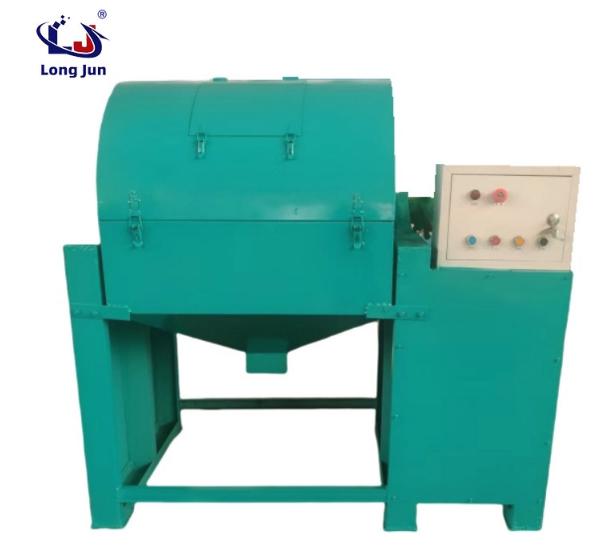
Understanding mechanical motion is crucial for optimizing energy efficiency and targeted yield. A grinding mill breaks down materials using two primary dynamic forces: impact and attrition. You must control both forces to achieve your desired output.
Attrition relies on heavy friction. It occurs primarily during a "cascading" motion. At lower rotational speeds, the grinding media slides and rolls over the material bed. This shearing action easily creates ultra-fine particles. Conversely, impact forces occur during a "cataracting" motion. As you increase speed toward the optimal range, lifters carry the media higher. The media then drops in a free-fall state. This violent impact shatters harder, coarse feed effortlessly.
Rotational speed dictates the balance between cascading and cataracting. However, you face a hard physical limit known as critical speed. At this velocity, centrifugal force pins the media strictly to the outer shell. The media never falls, and all grinding halts immediately.
Industry standards dictate operating windows between 50% and 90% of critical speed. Harder materials require higher speeds to maximize cataracting impact. Softer feeds perform better at lower speeds to encourage cascading attrition.
Proper volumetric loading directly impacts kinetic energy transfer. Heavy-industry operations typically follow strict baseline parameters. Operators maintain a total drum volume fill of approximately 50%. This total volume consists of specific ratios.
Parameter | Target Percentage | Operational Purpose |
|---|---|---|
Steel Ball Charge | 33% – 45% | Provides the necessary mass for impact and attrition forces. |
Material/Slurry Ratio | ~15% | Fills the voids between media to ensure continuous grinding contact. |
Empty Space (Headroom) | ~50% | Allows media to lift and achieve optimal cataracting trajectory. |
You must also monitor the "toe" of the charge. The toe represents the critical impact zone at the bottom of the drum. Here, descending media strikes the material bed. Maximizing energy transfer at the toe ensures efficient comminution.
Evaluating structural integrity helps you select reliable equipment. Core parts face immense mechanical stress daily. You must understand design variations to prevent catastrophic failures.
The heavy-duty drum and end-plates form the main housing. These structures endure constant vibration and heavy loads. Bearing selection plays a massive role in supporting this weight safely. You generally choose between trunnion bearings and slide shoe bearings.
Slide shoe bearings distribute weight more evenly across the shell. They often feature dual lubrication systems. Low-pressure lubrication handles continuous running. High-pressure starting systems inject oil before rotation begins. This lifts the heavy drum slightly and prevents damaging dry-starts.
Liners protect the outer shell and dictate media trajectory. Operators evaluate different liner profiles for specific tasks. Lifter bars lift media aggressively for cataracting. Wave liners offer a smoother surface to promote cascading.
Material selection determines replacement schedules:
White Cast Iron: Cost-effective but brittle. Best for smaller operations.
High-Manganese Steel: Impact-hardening properties make it highly durable. It thrives under heavy cataracting.
Rubber Linings: Excellent for noise reduction and wet grinding applications.
Multi-compartment mills utilize intermediate diaphragms. These internal walls separate different sizes of grinding media. They manage pressure drops and control material flow rates between chambers.
Moving a fully loaded drum requires immense torque. Gear arrangements usually involve pinions driving a massive ring gear. Smart facilities install reversible ring gears. These feature double-sided machining. Once one side wears down, you simply flip the gear to extend its lifespan.
Motor configurations must manage massive starting torque safely. Direct-on-line starts can cripple electrical grids. Facilities prefer slip-ring (wound rotor) motors. They reduce inrush current while delivering the necessary torque to initiate rotation.
Procurement engineers must match internal features to desired industrial outcomes. The wrong discharge type or processing method will ruin efficiency.
Discharge mechanisms dictate how material exits the drum. Grate mills utilize lifter bars acting as a pump. This forces material through slotted grates. It quickly removes correctly sized particles and prevents over-grinding. You use grate configurations primarily for coarse setups.
Overflow mills rely entirely on slurry displacement. As new feed enters, displaced slurry flows over the discharge trunnion. They have lower capital costs and require less maintenance. They handle high circulating loads beautifully and excel at fine grinds.
The processing environment dictates the entire auxiliary setup. Wet processing offers higher overall efficiency. It significantly lowers power consumption per ton. It relies heavily on strict slurry ratios, typically maintaining 75% solids.
Dry processing demands complex peripheral systems. You must implement robust air-swept configurations to pull particles through. Dust extraction becomes mandatory. A dedicated dry powder ball mill operates essentially for moisture-sensitive materials. Cement and ceramics require strictly dry environments to prevent clumping.
Emerging sectors demand specialized internal environments. Processing lithium battery solid-state electrolytes requires absolute purity. Conventional steel media introduces unacceptable iron contamination.
You mitigate this risk by swapping steel for ceramic, tungsten, or hard-alloy media. Furthermore, friction generates extreme heat. Battery precursors degrade rapidly at high temperatures. Engineers install external water spray systems. These cool the cylinder externally and prevent material degradation inside.
You cannot rely solely on vendor marketing claims. Calculating exact requirements ensures scalable, efficient production. Understanding the mathematics behind a Ball Mill prevents costly sizing errors.
Mill capacity does not scale linearly. It increases exponentially relative to the internal working diameter. Specifically, throughput scales by the internal diameter to the 2.6th power (Diameter^2.6). A surprisingly small increase in shell size yields massive throughput gains. You must measure this diameter strictly inside the liners.
The Bond Work Index establishes baseline power needs. It measures material hardness and grindability. Procurement engineers use standard Bond equation formulas to calculate net power requirements.
You establish your feed size (F80) and target product size (P80). F80 means 80% of the feed passes a specific mesh size. The equation calculates the exact kilowatt-hours per ton required to reduce F80 down to P80. This eliminates guesswork in motor sizing.
Balancing feed rate and internal volume dictates retention time. Managing this time ensures product quality.
Excessive Retention: Wastes energy rapidly. It causes severe over-grinding. This creates unusable slimes and ultrafine dust.
Insufficient Retention: Fails to meet target P80 sizes. The material exits before absorbing enough impact energy.
Grinding media degrades continuously. Factoring in media replacement remains crucial for operational budgets. Operators must consistently add fresh media to maintain optimal drum volume. Industry professionals call these fresh additions "green balls." Failing to replenish green balls drops grinding efficiency exponentially.
Operating massive rotating machinery introduces serious health, safety, and environmental (HSE) risks. Demonstrating operational expertise means prioritizing security and strict compliance.
Heavy steel crashing against steel generates severe noise. Operating noise levels frequently exceed 90 dBA. Continuous exposure damages human hearing permanently. You must mitigate these hazards immediately. Facilities deploy thick acoustic enclosures around the drum. Installing internal rubber linings also absorbs impact noise effectively.
Entering a confined drum poses extreme danger. Maintenance teams enforce strict Lockout/Tagout (LOTO) procedures. You must physically lock and tag all electrical breakers before anyone enters.
Unbalanced media loads can cause sudden, unpowered drum rotation. This crushes workers instantly. Therefore, HSE protocols mandate physical drum restraint systems. Teams use heavy steel ropes or massive locking pins to secure the drum against accidental rotation.
The drum interior constitutes a hazardous confined space. Friction bakes the interior air. Mandatory ventilation and cooling protocols must execute fully before human entry. Thermal risks also destroy materials. If temperatures remain unmanaged, gypsum dehydrates rapidly. This causes false-setting, effectively cementing the entire media charge together.
Operators must diagnose mechanical symptoms quickly to minimize downtime. Use the following chart for rapid fault identification.
Common Fault | Primary Cause | Actionable Solution |
|---|---|---|
Wash-out or Slurry Leaks | Bolt torque failure on liner bolts. | Re-torque all bolts to exact specifications during shutdown. |
Diaphragm Blinding | Spalled or shattered media clogging grate slots. | Halt feed, perform LOTO, and manually clear clogged grates. |
Bearing Overheating | Lubrication pressure drops or water-cooling system failure. | Check pump pressure instantly; clear blocked cooling water lines. |
Industrial grinding equipment is never a simple off-the-shelf purchase. It represents a highly engineered system. You must dimension it precisely to your material's Bond Work Index and your facility's power constraints. A slight miscalculation in diameter or motor torque cascades into massive daily inefficiencies.
To move forward effectively, we recommend establishing absolute clarity on your P80 and F80 targets first. Conduct pilot-scale material testing to verify the Bond Work Index. Finally, demand concrete vendor guarantees for both motor torque and liner lifespans before you finalize any specification sheet.
A: A tumbling mill represents the broader category of rotating cylindrical grinding equipment. The distinction lies in the grinding media used. Ball mills utilize spherical grinding media, usually forged steel or ceramic balls. Rod mills use long cylindrical steel rods. Autogenous mills use the large ore pieces themselves as the grinding media.
A: You are likely operating above the optimal critical speed. Excessive speed causes the grinding media to centrifuge against the shell rather than fall and impact the material. Improper media charge levels also waste power. If your drum volume exceeds 50% capacity, the media lacks headroom to drop efficiently.
A: You control particle size by adjusting internal retention time and varying the diameters of your grinding media. Additionally, dry systems use air-sweepers and dynamic classifiers. Increasing the air sweep velocity pulls coarser particles out faster. Adjusting the classifier speeds ensures only ultra-fine particles exit the system.


