
- All
- Product Name
- Product Keyword
- Product Model
- Product Summary
- Product Description
- Multi Field Search
English

Views: 0 Author: Site Editor Publish Time: 2026-04-06 Origin: Site
Procuring an industrial Ball Mill is rarely a straightforward catalog purchase. Initial sticker prices often mask the true long-term financial impact. You might assume a simple upfront payment covers your needs. However, hidden expenses quickly accumulate over time. Buyers frequently face quotes for identical capacities varying by over 100%. This massive price gap causes widespread confusion in the market. Procurement teams struggle to distinguish between genuine engineering value and unjustified brand premiums. Navigating these complex proposals requires deep technical insight and rigorous vendor screening. This guide breaks down the true capital expenditure (CAPEX) and operational expenditure (OPEX) of these machines. We provide a clear framework to help you evaluate competitive quotes. You will learn how to spot low-price traps immediately. Finally, we show you how to forecast long-term operational expenses accurately.
Pricing Spectrum: Costs range from under $10,000 for a small laboratory horizontal ball mill to over $3.0M for high-tonnage mining applications.
The TCO Reality: Installation and commissioning typically add 30% to 70% to the base equipment price.
OPEX Dominance: Over a 10-year lifecycle, energy consumption (40-50% of plant usage) and grinding media replacement dwarf the initial CAPEX.
Quote Evaluation: Price disparities are largely driven by metallurgy (e.g., high-chrome vs. standard manganese), motor efficiency ratings, and structural integrity testing (NDT).
Setting realistic baseline budgets requires transparent figures. Procurement teams must understand the general pricing spectrum across the market. We break down expected capital expenditures across different operational scales. This helps you avoid unrealistic financial planning from day one.
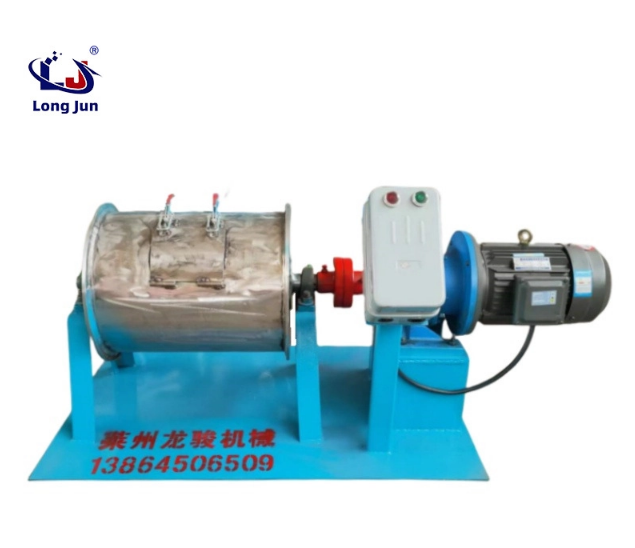
These compact machines generally cost between $10,000 and $80,000. Operators use them primarily in pilot plants and specialty ceramics. Research and development facilities rely heavily on these units. This tier includes the standard small laboratory horizontal ball mill. Manufacturers design these specific units for low-volume, high-precision processing. They demand exact engineering tolerances to prevent batch contamination. You pay for precision rather than sheer steel volume here.
Prices jump significantly to an estimated range of $250,000 to $1.5M. Industrial sectors like cement processing require these robust machines. Medium-tier mineral concentrators also depend on this capacity class. The structural engineering involves thicker steel and larger drive systems. Continuous operation demands heavy-duty bearings and advanced cooling systems. You must budget for heavier foundations and more complex installation procedures.
Major extraction sites require massive financial investments. Estimated costs run from $2.5M to well over $15.0M. You will find these giants at major copper, gold, and iron ore facilities. They demand complex logistics just to reach the remote installation sites. Often, these units utilize gearless motor drives and specialized automation software. The pure mass of raw materials dictates extreme pricing.
Base equipment prices rarely represent your final invoice. A quoted base price explicitly excludes vital ancillary equipment. You must budget for additional hydrocyclones and high-pressure lubrication systems. Feeding mechanisms also add significant extra costs. Furthermore, specialized variable frequency drives and discharge trommels inflate the final sum. Always ask vendors what auxiliary gear their quote omits.
Mill Scale | Capacity Range | Estimated Base Price | Common Applications |
|---|---|---|---|
Small / Specialty | < 5 tph | $10,000 – $80,000 | R&D, Pilot Plants, Ceramics |
Medium Industrial | 50 – 150 tph | $250,000 – $1.5M | Cement, Mineral Concentrators |
Large Mining | > 500 tph | $2.5M – $15.0M+ | Copper, Gold, Iron Ore |
Procurement teams often stare at two identical capacity quotes showing vastly different prices. Technical variables heavily justify premium pricing over budget options. We highlight the core engineering components driving these financial disparities. Understanding these differences protects you from purchasing inferior equipment.
Grid-type models typically cost much more than overflow alternatives. They feature a complex grate discharge structure inside the cylinder. This added internal engineering physically prevents severe over-grinding of materials. Manufacturers charge a premium for this intricate casting and fabrication. Overflow models rely on simple gravity displacement. They are cheaper to build but offer less control over the final particle size distribution.
Wet processing environments introduce unique operational challenges. These specialized machines carry a notable price premium. They require extensive anti-corrosion chemical treatments on inner surfaces. Engineers must also install specialized sealing and slurry handling configurations. Dry processing requires expensive dust collection systems externally. However, the internal mechanics of a wet system demand pricier, rust-resistant materials upfront.
Internal linings take constant abuse from heavy steel media. High-chrome steel liners command higher upfront costs. Premium rubber liners also increase the initial quote. However, they drastically reduce replacement frequency compared to standard high-manganese steel. This material choice alone causes massive quote fluctuations. You pay more initially to avoid replacing liners twice a year.
Motors act as the beating heart of your equipment. Quotes utilizing premium IE3 or IE4 standard motors will appear higher. High-quality AGMA-compliant gears also push initial prices upward. These premium choices directly reduce long-term electrical expenses. They also mitigate catastrophic failure risks during continuous 24/7 operation. Cheaper models use unrated motors prone to sudden thermal overload.
Savvy buyers look far beyond the initial purchase price. Continuous operational costs quickly overshadow early savings. Understanding long-term expenses ensures better plant profitability. You must model these ongoing costs accurately before signing a contract.
An industrial grinding mill often consumes up to 50% of a processing plant's total energy. Electricity remains an unavoidable and massive monthly expense. Even a 2% gain in motor efficiency yields massive financial returns. Over a decade, premium motors pay for themselves multiple times over. Budgeting for energy-efficient drives is a strategic necessity, not an optional luxury.
Steel balls wear down constantly during daily operations. Consumption averages 0.3 to 1.5 kg per ton of material processed. You must carefully estimate the annual cost of continuous media replenishment. The hardness of your specific ore dictates this burn rate. Budgeting for high-quality forged steel balls reduces this ongoing burn rate slightly. It remains a relentless operational expense.
Liner changes represent a massive operational bottleneck. The true cost of a liner goes beyond the steel or rubber itself. The real expense is your lost production revenue. You lose money during the 48 to 72 hours required for maintenance changeouts. You must also pay specialized maintenance crews and rent heavy lifting cranes. Faster changeout designs justify a higher upfront equipment cost.
Buyers must apply a skeptical lens to suspiciously cheap quotes. Extreme discounts usually signal severe engineering shortcuts. We outline common traps unscrupulous vendors use to win competitive bids. Falling for these tricks leads to disastrous operational failures.
Compromised Shell Thickness: Some suppliers secretly reduce prices by using thinner steel plates. The main cylinder relies on optimal thickness for structural integrity. Thinner shells lead to severe warping under heavy operational loads. Once the shell warps, the main gears misalign. This misalignment quickly destroys the entire drive pinion.
Missing Quality Documentation: A credible quote must always include Non-Destructive Testing (NDT) reports. Ultrasonic testing for welds and gears remains non-negotiable. Cheap quotes almost always skip these critical safety protocols entirely. Operating a machine without certified welds risks a catastrophic rupture. This could shut down your entire facility indefinitely.
Traders vs. Direct Manufacturers: Extreme price fluctuations often occur when dealing with third-party brokers. Middlemen frequently lack in-house engineering support and reliable after-sales service. They also rarely carry a dependable spare parts inventory. You might buy a cheap machine today. Three years later, you cannot find the proprietary blueprints for replacement parts.
Apples-to-apples vendor comparisons require a strict shortlisting framework. You must provide exact operational data to get accurate pricing. Use this practical checklist to eliminate hidden fees from your final contract. Force your suppliers to address every single point explicitly.
Material Hardness (Bond Work Index): Vendors cannot size a drive motor accurately without this exact data. It measures the crushability of your specific ore. Supplying generic estimates leads to undersized motors and immediate production bottlenecks.
Feed & Target Discharge Size: This data determines the required length-to-diameter ratio. It also dictates your ideal media sizing. Incorrect ratios result in poor particle size distribution. This ruins the efficiency of your entire downstream process.
Required Capacity (TPH): Accurate tonnage requirements ensure the equipment is neither bottlenecked nor over-specified. Buying too large wastes massive amounts of electricity. Buying too small creates a permanent plant bottleneck.
Downstream Process Integration: Clarify how the output integrates into your wider plant. Consider connections to classifiers, flotation cells, or high-temperature kilns. The vendor must design the discharge mechanism to match your existing infrastructure perfectly.
Site Constraints: Local factors impact the final delivered price heavily. Consider site elevation, regional voltage standards, and physical shipping limitations. High altitudes require specialized motor cooling. Remote locations might require segmented shells for transport.
Use the strategic comparison chart below to evaluate quotes objectively during the final vendor selection phase.
Evaluation Category | Warning Signs in Budget Quotes | Indicators of Premium Engineering |
|---|---|---|
Quality Documentation | No NDT reports or ultrasonic testing provided | Full QA/QC dossier with certified weld inspections |
Motor Specs | Standard, unrated, or generic models | IE3 / IE4 compliant energy-efficient systems |
Liner Material | Standard high-manganese steel | High-chrome steel or heavy-duty rubber alloys |
Ancillary Equipment | Listed as "optional extras" hidden in fine print | Fully integrated into the baseline quotation package |
Evaluating an industrial comminution system requires strategic foresight. You must look far past the initial capital expenditure. Understanding metallurgical quality helps you predict maintenance cycles accurately. Recognizing motor efficiency differences allows you to model future energy bills securely. Identifying lifetime operational expenses protects your overall project profitability.
We highly encourage buyers to conduct a comprehensive lifecycle cost analysis. Do not accept single-line pricing on major equipment proposals. Demand comprehensive breakdowns detailing motors, gears, and inner liners. Force vendors to clarify every technical specification thoroughly. Complete this rigorous review before advancing any supplier to your final shortlist.
A: Used equipment offers rapid deployment and lower initial pricing. Costs range from $6,000 to $200,000 depending entirely on size. However, buyers face significant operational risks. You must rigorously audit the equipment age and inspect trunnion wear. Ensure the current availability of OEM spare parts before signing.
A: SAG (Semi-Autogenous Grinding) mills handle massive feed sizes internally. They do not rely entirely on heavy steel media. This unique process requires much larger cylinder diameters. They demand massive structural integrity and highly advanced drive mechanisms. These intense engineering upgrades justify a significantly higher price point for equivalent tonnages.
A: Credible direct manufacturers typically offer 12 to 36 months of warranty coverage. This guarantee protects major structural components like shells and trunnions. Expect strict exclusions for standard wear parts. Consumable items like inner liners and grinding media are never covered under these structural warranties.


