
- All
- Product Name
- Product Keyword
- Product Model
- Product Summary
- Product Description
- Multi Field Search
English

Views: 0 Author: Site Editor Publish Time: 2026-01-27 Origin: Site
In many industrial settings, efficient mixing is essential for producing high-quality products, and selecting the right mixer can significantly impact production efficiency. Two of the most commonly used types of mixers are planetary mixers and spiral mixers. Both have unique mechanisms and are suited for different applications across industries such as food processing, pharmaceuticals, and cosmetics. While planetary mixers offer versatility for various materials, spiral mixers are specially designed to excel at mixing dough. Choosing between these two types of mixers requires understanding their features, strengths, and limitations, which can help businesses optimize their production processes and meet specific requirements. In this article, we will compare planetary mixers and spiral mixers, examining their key differences, applications, and when to choose each for optimal performance.
A planetary mixer is a type of industrial mixer that uses a unique mixing action, where the mixing tools (usually a whisk, beater, or paddle) rotate around both their own axis and the central axis of the bowl. This dual motion mimics the planetary movement in space, where the tools not only spin on their own but also revolve around the bowl, ensuring uniform and thorough mixing. This design enables the planetary mixer to handle a wide range of materials with varying viscosities and textures, making it incredibly versatile.
Planetary mixers are equipped with multiple attachments that rotate at different speeds, ensuring that all ingredients are evenly mixed. The planetary motion helps achieve a consistent mix by constantly moving the material through different parts of the mixing bowl. This mechanism is particularly useful for products that require delicate mixing or need to be incorporated in stages, such as creams, pastes, or dough.
Planetary mixers are commonly used in industries where a uniform mix is critical, including:
Food Processing: For making batters, sauces, fillings, and frostings, where consistency is key to the final product’s texture and taste.
Cosmetics: Used for mixing creams, lotions, and gels, where uniformity and precise ingredient incorporation are crucial.
Pharmaceuticals: In the production of creams, ointments, and other delicate formulations, where precise mixing ensures product quality and effectiveness.
A spiral mixer is an industrial mixing machine specifically designed for the mixing and kneading of dough. Unlike planetary mixers, which use rotating paddles to mix materials in a bowl, spiral mixers use a unique spiral-shaped hook that rotates while the bowl itself also turns. This design creates a highly efficient kneading action, which is ideal for the development of dough with the proper consistency and elasticity. The spiral hook moves through the dough more effectively, stretching and folding the dough, which helps incorporate air and develop gluten, a crucial component for producing dough with good texture.
Spiral mixers are specialized for dough mixing, unlike planetary mixers, which can handle a variety of materials with different viscosities. The primary advantage of a spiral mixer is its ability to mix dough more efficiently and with less heat generation, which can negatively affect dough quality. Spiral mixers are designed to handle large quantities of dough, making them ideal for bakeries and other high-volume operations.
Spiral mixers are predominantly used in industries that require high-quality dough mixing, including:
Baking: Spiral mixers are the go-to machines for bakeries, pizzerias, and other food manufacturers that produce bread, pizza dough, pastries, and other dough-based products. They provide consistent dough texture and help develop the gluten structure needed for high-quality baked goods.
Dough Production: Used in large-scale dough production facilities, spiral mixers help streamline dough preparation for mass production, ensuring uniformity and efficiency.
Food Processing: In certain food applications like pasta or pastry production, spiral mixers can be employed to mix dough-like products.
Planetary Mixers: These mixers feature rotating tools (whisk, paddle) that spin on their own axis while revolving around the bowl's central axis. This dual motion ensures thorough mixing, making them ideal for liquids, creams, and batters.
Spiral Mixers: Equipped with a spiral-shaped hook, spiral mixers rotate both the hook and bowl, creating a kneading action that’s highly efficient for dough. This design is perfect for developing gluten and creating elastic dough.
Planetary Mixers: Best for food processing, cosmetics, and pharmaceuticals where uniform mixing of various materials like batters, creams, and pastes is required.
Spiral Mixers: Specialized for dough mixing, commonly used in bakeries and pizzerias for products like bread, pizza crusts, and pastries that require optimal gluten development.
Planetary Mixers: Offer flexibility and handle various viscosities, but may not be as fast or efficient for heavy kneading tasks like dough. They're more suited for general-purpose mixing.
Spiral Mixers: Specifically designed for dough, spiral mixers are faster and more efficient for kneading, producing dough with the right texture and elasticity in less time.
Planetary Mixers: Due to their complex design and multiple attachments, they require more frequent maintenance, particularly for the motor and moving parts.
Spiral Mixers: With a simpler design, spiral mixers are easier to maintain and generally require less upkeep, though regular checks are still needed for the spiral hook and bowl.
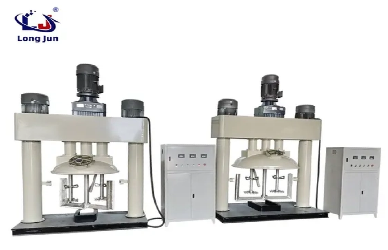
Planetary mixers are ideal for industries that require precise and uniform mixing of materials with varying viscosities. Some common industries and situations where planetary mixers excel include:
Food Processing: For mixing batters, sauces, fillings, frostings, and dough with a range of textures and consistencies.
Cosmetics and Pharmaceuticals: Used to mix creams, lotions, ointments, gels, and other semi-solid materials where consistency and thorough blending are crucial.
Chemical and Paint Manufacturing: For mixing chemicals, pigments, and other components into smooth pastes or liquids, ensuring an even distribution of ingredients.
Baking: Though not specialized for dough, planetary mixers are still used in bakeries for mixing cake batters, frostings, and other non-dough products that require a light, uniform mix.
Planetary mixers are versatile and can handle a variety of materials, including:
Viscous Liquids and Pastes: Such as cake batter, icing, and custard, where a thorough, uniform mixture is required.
Creams and Ointments: In cosmetics and pharmaceutical applications, planetary mixers are used to mix thick pastes, creams, and ointments where a smooth texture is important.
Powder and Liquid Combinations: For products like adhesives, paints, and coatings, where powdered ingredients need to be evenly incorporated into a liquid base.
Spiral mixers are primarily designed for industries that involve large-scale dough production and require precise kneading to achieve optimal dough texture and elasticity. They excel in the following applications:
Bakeries: Spiral mixers are a staple in bakeries, particularly for mixing bread dough, pizza dough, and other dough-based products that need to develop gluten.
Pizzerias: Used for mixing pizza dough, which requires a specific texture for proper stretching and rising.
Dough Production Facilities: In commercial dough production, spiral mixers handle high volumes of dough efficiently, ensuring consistency and quality across large batches.
Pastry and Confectionery: Ideal for mixing dough for pastries, croissants, and other delicate dough products that require precise kneading.
Spiral mixers are specifically engineered to knead dough efficiently, providing several advantages:
Gluten Development: The spiral hook’s kneading action efficiently develops gluten, which is essential for creating dough with the right elasticity, texture, and rise.
Efficient and Gentle Mixing: Spiral mixers handle large batches of dough with minimal heat generation, preserving the dough’s quality. The gentle kneading process also prevents overworking the dough, which could affect its texture.
Time and Labor Efficiency: Spiral mixers can handle large volumes of dough in less time compared to other types of mixers, making them ideal for high-volume operations like bakeries and pizzerias.
Consistency: With a consistent and uniform mixing action, spiral mixers ensure that each batch of dough has the same texture and quality, crucial for maintaining product consistency.
Planetary mixers are commonly used in food processing, cosmetics, pharmaceuticals, and other industries that require thorough mixing of diverse materials.
While planetary mixers can handle dough, they are not as specialized as spiral mixers, which are specifically designed for optimal dough mixing.
Spiral mixers are generally more energy-efficient for dough mixing due to their specialized design, while planetary mixers can be more versatile but may consume more power for certain tasks.
Planetary mixers typically require more frequent maintenance due to their complex moving parts, whereas spiral mixers are often simpler and require less maintenance for dough-related tasks.
Choosing the right mixer depends on the specific needs of your business and the materials you work with. If your operation requires versatile mixing for a wide range of materials, including batters, creams, pastes, and liquids with varying viscosities, a planetary mixer is the ideal choice. It excels in industries like food processing, cosmetics, and pharmaceuticals, providing thorough and uniform mixing for products that require delicate handling and precise consistency. On the other hand, if your business revolves around dough production—whether for bread, pizza, pastries, or other dough-based products—a spiral mixer is the better option. Spiral mixers are designed for high-efficiency dough kneading, ensuring optimal gluten development and dough consistency without overheating. By evaluating your production volume, product requirements, and specific mixing needs, you can select the mixer that will enhance efficiency, product quality, and overall operational performance.


