
- All
- Product Name
- Product Keyword
- Product Model
- Product Summary
- Product Description
- Multi Field Search
English

Views: 0 Author: Site Editor Publish Time: 2025-11-11 Origin: Site
In the realm of industrial mixing, the Kneader Mixer stands out as a pivotal tool, renowned for its ability to handle high-viscosity materials with efficiency and precision. This article delves into the working principle of the kneader mixer, exploring its various types, applications, and the science behind its operation. For those interested in the nuances of industrial mixing technology, understanding the intricacies of the kneader mixer is essential. The Tilt Kneader Mixer is a variant that offers unique advantages in specific applications, further broadening the scope of this versatile equipment.
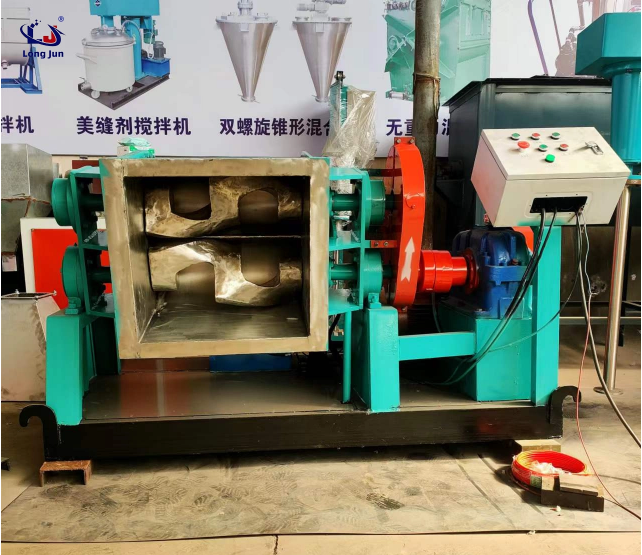
The kneader mixer is a specialized piece of equipment designed for mixing, kneading, and homogenizing highly viscous materials. Its design typically includes two blades that rotate towards each other, creating a shearing action that efficiently mixes the materials. The blades are housed in a U-shaped trough, and the entire assembly is powered by a robust motor capable of handling the high torque required for mixing dense materials.
Kneader mixers are particularly effective in industries where the mixing of solid and liquid components is necessary. This includes sectors such as pharmaceuticals, food processing, and rubber manufacturing. The ability of the kneader mixer to handle high-viscosity materials makes it indispensable in these industries, where traditional mixers might struggle.
There are several types of kneader mixers, each designed to meet specific industrial needs. The most common types include the sigma mixer, the tilt kneader mixer, and the planetary mixer. Each type has its unique advantages and is suited for different applications.
The Sigma Mixer is perhaps the most well-known type of kneader mixer. It features two sigma-shaped blades that rotate towards each other, creating a powerful shearing action. This design is particularly effective for mixing doughs, rubber compounds, and other high-viscosity materials.
The tilt kneader mixer, on the other hand, offers the advantage of easy discharge. By tilting the mixing trough, the contents can be easily emptied, making it ideal for batch processing. This type of mixer is often used in the food industry, where quick and efficient processing is crucial.
The working principle of a kneader mixer revolves around the interaction of its blades with the material being mixed. As the blades rotate, they create a combination of shear and compressive forces that break down the material and blend it into a homogeneous mixture. The design of the blades is crucial, as it determines the efficiency of the mixing process.
In a typical operation, the materials are loaded into the trough, and the blades are set in motion. The rotation of the blades generates a flow pattern within the trough, ensuring that all parts of the material are subjected to the mixing action. The speed and angle of the blades can be adjusted to optimize the mixing process for different materials.
Kneader mixers are used in a wide range of industries due to their versatility and efficiency. In the food industry, they are used for mixing doughs, batters, and other viscous ingredients. The pharmaceutical industry utilizes kneader mixers for blending active ingredients with excipients, ensuring uniformity in the final product.
In the rubber and plastics industries, kneader mixers are essential for compounding rubber and plastic materials. The ability to handle high-viscosity materials makes them ideal for these applications, where uniform mixing is critical to the quality of the final product.
The primary advantage of kneader mixers is their ability to handle high-viscosity materials that would be challenging for other types of mixers. This capability is due to the robust design of the blades and the powerful motors that drive them. Additionally, kneader mixers offer precise control over the mixing process, allowing operators to adjust the speed and angle of the blades to achieve the desired consistency.
Another advantage is the durability of kneader mixers. They are built to withstand the rigors of industrial use, with components designed to resist wear and tear. This durability translates to a longer lifespan and lower maintenance costs, making kneader mixers a cost-effective solution for many industries.
The kneader mixer is an indispensable tool in industries that require the mixing of high-viscosity materials. Its robust design, coupled with the ability to handle a wide range of materials, makes it a versatile and efficient solution for industrial mixing needs. Whether in the food, pharmaceutical, or rubber industries, the kneader mixer offers unmatched performance and reliability. For those seeking to optimize their mixing processes, understanding the working principle and applications of kneader mixers is crucial. The Tilt Kneader Mixer and Sigma Mixer are just two examples of how this technology can be tailored to meet specific industrial needs.
1. What industries benefit most from kneader mixers?
Industries such as food processing, pharmaceuticals, rubber, and plastics benefit significantly from kneader mixers due to their ability to handle high-viscosity materials efficiently.
2. How does a sigma mixer differ from a tilt kneader mixer?
The sigma mixer features sigma-shaped blades for effective shearing, while the tilt kneader mixer offers easy discharge through its tilting mechanism, making it ideal for batch processing.
3. Can kneader mixers handle both solid and liquid components?
Yes, kneader mixers are designed to mix both solid and liquid components, making them versatile for various industrial applications.
4. What are the maintenance requirements for kneader mixers?
Kneader mixers require regular maintenance to ensure optimal performance, including checking blade alignment, motor function, and lubrication of moving parts.
5. Are kneader mixers suitable for small-scale operations?
While kneader mixers are typically used in large-scale industrial settings, smaller models are available for laboratory and small-scale production needs.
6. How do kneader mixers ensure uniform mixing?
The design of the blades and the controlled rotation create a consistent flow pattern, ensuring that all parts of the material are evenly mixed.
7. What safety features are included in kneader mixers?
Kneader mixers are equipped with safety features such as emergency stop buttons, protective guards, and overload protection to ensure safe operation.


