
- All
- Product Name
- Product Keyword
- Product Model
- Product Summary
- Product Description
- Multi Field Search
English

Views: 0 Author: Site Editor Publish Time: 2026-03-11 Origin: Site
Mixing can make or break product quality in factories. Yet many systems still struggle with thick, sticky materials. Why do some production lines achieve perfect consistency while others fail? A sigma mixer offers a reliable solution for handling high-viscosity materials like adhesives, rubber, and pastes. Its dual-blade design delivers strong kneading and precise blending, helping factories improve both efficiency and output quality. As demand grows, manufacturers often choose advanced solutions from experienced suppliers like Longjun to meet specific production needs.
In this article, you will learn the top benefits of using a sigma mixer in factories. We will explore how it improves mixing performance, product consistency, and overall production efficiency.
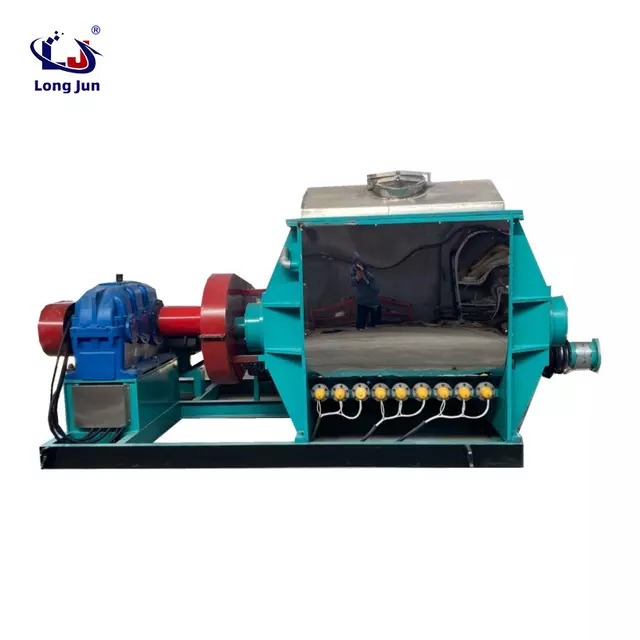
At the core of every sigma mixer is its dual Z-shaped blades. These blades rotate at different speeds, creating intense shear forces. This motion continuously folds, presses, and stretches materials.
As a result, even the most resistant substances become evenly blended. Unlike conventional mixers, it ensures no portion remains untouched.
Factories often work with materials that are difficult to process—rubber, sealants, silicone, and heavy pastes. A sigma mixer is built specifically for these conditions.
It handles extremely high viscosities without compromising performance. This makes it ideal for industries such as:
● Chemical manufacturing
● Rubber processing
● Adhesive production
● Food and confectionery
Time matters in industrial production. A sigma mixer significantly reduces mixing time while maintaining high quality. It allows operators to complete more batches within the same production window, improving overall efficiency.
Most batches achieve near-complete uniformity within a short cycle. Faster mixing means higher throughput and better use of production capacity. This also helps reduce energy consumption per batch over time.
The design of the mixing trough and blade movement ensures continuous material flow. Materials move from one side to another while being folded and sheared.
This eliminates dead zones and improves mixing efficiency across the entire batch. It also ensures that no portion of the material remains under-processed during operation.
Factories rely on consistency. A sigma mixer delivers stable and repeatable results, even under heavy workloads. This makes it suitable for continuous industrial production environments.
Whether handling small batches or large-scale production, it maintains performance without fluctuation. This consistency helps reduce product variation and improves overall quality control.
Uniformity is critical in manufacturing. A sigma mixer ensures every component is evenly distributed.
This leads to:
● Consistent texture
● Balanced composition
● Improved product performance
Lumps and agglomerates often reduce product quality and affect downstream processing. A sigma mixer addresses this issue through its perforated blade design, which continuously breaks down these formations during mixing. This process leads to a smoother, more uniform final product across different applications.
Industry | How Lump Breakdown Improves Results | Impact on Final Product |
Pharmaceuticals | Ensures even distribution of active ingredients | More stable and effective formulas |
Food Products | Removes uneven texture in dough or pastes | Better taste and consistency |
Specialty Chemicals | Eliminates particle clusters in dense mixtures | Improved performance and uniformity |
In industrial settings, consistency is non-negotiable. Sigma mixers provide repeatable results across multiple production cycles. This ensures that each batch follows the same mixing pattern and process conditions.
This reduces variations and ensures every batch meets the same standards. It also minimizes the risk of rework or material waste during production.
When mixing is consistent, quality control becomes easier. Fewer defects occur, and products meet regulatory or customer requirements more reliably. This is especially important in industries with strict compliance standards.
Stable mixing performance also supports better inspection results and smoother certification processes. It helps factories maintain a strong and consistent product reputation.
Temperature control plays a critical role in many mixing processes. A sigma mixer with a jacketed design allows operators to manage both heating and cooling efficiently during production, ensuring materials stay within optimal processing conditions.
Feature | Function Description | Benefit to Factory Process |
Jacketed Trough Design | Surrounds the mixing chamber with thermal layers | Enables controlled heat transfer |
Heating Capability | Applies heat when materials require activation | Supports proper material transformation |
Cooling Capability | Removes excess heat during mixing | Prevents overheating and degradation |
Adjustable Temperature | Allows operators to fine-tune temperature levels | Ensures stable and precise processing |
Some materials react strongly to temperature changes. A sigma mixer helps maintain stable conditions, protecting sensitive ingredients.
This is especially important in:
● Food production (e.g., candy, dough)
● Pharmaceutical formulations
● Chemical reactions
Note: Maintaining stable temperature during mixing helps prevent material degradation and ensures consistent product quality.
Handling sticky or dense materials manually can be labor-intensive and inefficient. A sigma mixer automates this process.
It reduces:
● Labor effort
● Material loss
● Operator fatigue
Efficient discharge is just as important as effective mixing. A sigma mixer is designed to simplify material removal through multiple discharge options, helping factories improve workflow and reduce handling time.
Discharge Method | How It Works | Operational Benefit |
Tilting Tank System | The mixing chamber tilts to release materials | Fast and complete batch discharge |
Bottom Discharge Valve | Material exits through a valve at the bottom | Controlled and precise material flow |
Screw / Extruder System | Uses a screw mechanism to push material outward | Continuous transfer for downstream use |
Efficient mixing and discharge streamline the entire production process. Downstream operations such as packaging or further processing can begin sooner.
Tip: Choosing the right discharge method for your sigma mixer can significantly improve production speed and reduce downtime.
A sigma mixer stands out for its flexibility across different industries. It adapts easily to various material types and processing needs, making it a reliable choice for diverse production environments.
Industry | Typical Application | Mixing Benefit |
Food Production | Dough and confectionery mixing | Consistent texture and uniform blending |
Pharmaceuticals | Ointments and compound preparation | Precise and homogeneous formulations |
Chemical Industry | Adhesives and sealant processing | Strong mixing of dense materials |
A sigma mixer supports a wide range of mixing tasks across industries. It adapts easily to different material states and processing requirements, making it highly practical in complex production lines.
It can handle:
● Solid-solid mixing, ensuring even distribution of dry components
● Solid-liquid mixing, improving binding and integration of materials
● Thick pastes and slurries, maintaining consistency during heavy-duty processing
This versatility makes it a valuable tool in many production lines. It also reduces the need for multiple mixing machines in one facility.
Manufacturers often require tailored solutions to match specific processes. Sigma mixers can be customized to meet these unique demands without compromising performance.
Common customization options include:
● Vacuum systems for air-sensitive or bubble-free mixing
● Heating or cooling jackets for temperature control
● Different blade configurations for various material textures
This ensures the equipment fits exact process requirements. It also improves efficiency and helps optimize production outcomes.
Working with experienced manufacturers like Longjun ensures better results. They provide solutions based on real industry needs and long-term application experience.
They offer:
● Flexible customization options for different production setups
● Stable machine operation for continuous industrial use
● Proven experience across global industries and applications
Their expertise helps factories select the right configuration for specific applications. This reduces setup errors and improves overall equipment performance.
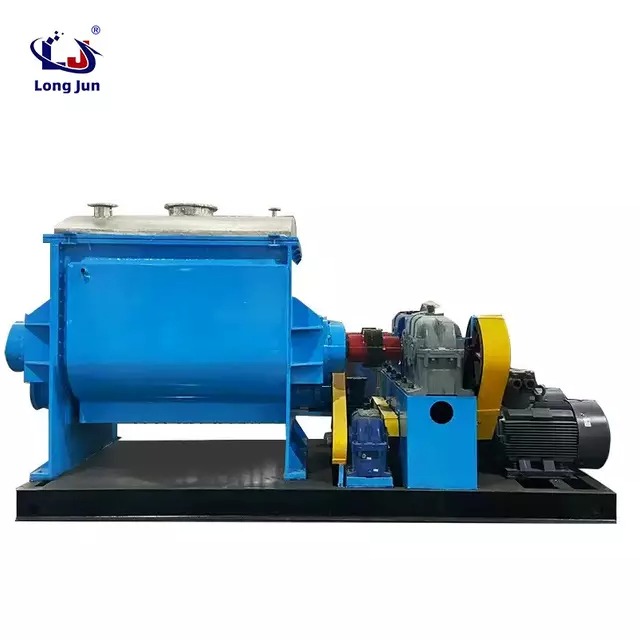
Sigma mixers are built for demanding environments. They are typically made from high-grade materials such as stainless steel, which resists corrosion and wear over time. This ensures durability and long service life, even under continuous operation.
Their robust structure allows them to handle heavy loads without performance loss. It also supports stable operation during long production cycles, reducing unexpected interruptions.
Cleanliness is essential in many industries. Sigma mixers are designed with smooth surfaces and accessible components, which simplify cleaning procedures.
This makes cleaning easier and supports hygiene standards in:
● Food production, where contamination must be avoided
● Pharmaceuticals, where strict cleanliness is required
These features help maintain product safety and reduce cleaning time between batches
Reliable construction plays a key role in long-term equipment performance. A sigma mixer is designed to reduce maintenance frequency, helping factories maintain stable and continuous operations over time.
Maintenance Advantage | Description | Impact on Factory Operations |
Less Downtime | Fewer breakdowns during operation | Maintains uninterrupted production |
Lower Repair Costs | Reduced need for frequent repairs or replacements | Saves long-term operational expenses |
Consistent Production | Stable machine performance over time | Improves scheduling and output reliability |
Choosing a trusted supplier adds long-term value. Companies like Longjun provide complete support throughout the equipment lifecycle.
They offer:
● Pre-sale consultation to match equipment with production needs
● Installation support for smooth setup and integration
● After-sales service to ensure long-term performance
This ensures smooth integration and reliable operation over time. It also helps factories maximize the value of their investment.
A sigma mixer is not just basic mixing equipment. It serves as a powerful solution for factories handling thick and complex materials. It improves mixing efficiency, ensures better consistency, and supports smoother production workflows across different industries. Its ability to control temperature and deliver uniform results makes it highly reliable in demanding environments.
It also adapts well to various production needs, making it suitable for food, chemical, and pharmaceutical applications. Choosing the right machine means choosing long-term performance and stability. Laizhou Longjun Machinery Co., Ltd. offers advanced sigma mixer solutions designed for durability, flexible customization, and stable operation. Their equipment helps factories improve output quality while reducing operational challenges, making it a valuable investment for modern manufacturing.
A: A sigma mixer is used to mix and knead high-viscosity materials like adhesives, rubber, and pastes. It helps factories achieve uniform blending and consistent product quality.
A: Factories prefer a sigma mixer because it handles thick materials more efficiently. Its dual-blade design provides stronger shearing action and better mixing results.
A: A sigma mixer reduces mixing time and improves batch consistency. It also supports automated discharge, which speeds up the overall production workflow.
A: A sigma mixer is widely used in food, pharmaceutical, chemical, and rubber industries. It works well for materials that require intensive mixing and precise control.
A: Yes, a sigma mixer often includes heating or cooling jackets. This allows precise temperature control, making it ideal for sensitive materials.
A: The cost of a sigma mixer depends on size, materials, and customization. Industrial models usually range from mid to high investment levels based on production needs.


