
- All
- Product Name
- Product Keyword
- Product Model
- Product Summary
- Product Description
- Multi Field Search
English

Views: 0 Author: Site Editor Publish Time: 2026-01-21 Origin: Site
Plastic pollution is a growing environmental crisis, with millions of tons of plastic waste polluting landfills, rivers, and oceans each year. This waste takes centuries to break down, harming ecosystems and wildlife. Plastic recycling helps reduce this impact by reprocessing used plastic into valuable raw materials, conserving resources and lowering emissions.
Recycling machines are essential to this process, automating the stages of sorting, cleaning, shredding, and pelletizing plastic. By improving efficiency and minimizing manual labor, these machines play a key role in scaling up recycling efforts and combating plastic pollution.
The first step in plastic recycling involves collecting plastic waste and sorting it by material type, such as PET, HDPE, PVC, and others. Sorting is essential because each type of plastic has unique properties, such as density, melting point, and chemical composition, which require specific processing methods for effective recycling. Accurate sorting ensures that the plastic is properly processed in the next stages, maximizing recycling efficiency and minimizing contamination.
To ensure accurate sorting, several technologies are employed:
Conveyor Belts: These are used to transport the collected plastic waste to sorting stations, ensuring a smooth flow of materials and preventing bottlenecks in the sorting process.
Air Classifiers: These machines use airflow to separate lighter plastics from heavier ones. The air helps lift lighter plastics while heavier plastics fall, allowing for precise isolation of different materials.
Manual Sorting: In some cases, workers manually inspect and separate plastics that may require more detailed identification, such as distinguishing between similar-looking materials. This step ensures the accuracy of sorting, particularly for complex or mixed plastics.
In this stage, plastic waste is fed into industrial shredders, which use sharp blades to cut the plastic into smaller, more manageable pieces. These shredders are designed to handle large plastic items, breaking them down into fine, uniform particles. The shredded material is now much easier to transport, store, and process in subsequent stages. This step is essential for ensuring the plastic is in the right form for cleaning, melting, and further processing.
Shredding is a crucial step because it ensures that the plastic is broken down into smaller sizes that can be easily handled and processed in the following recycling stages. Smaller pieces are more efficient to clean, as contaminants can be removed more effectively from a larger surface area. Additionally, smaller plastic particles melt more evenly and quickly during the extrusion process, which improves the overall efficiency and quality of the final product. This step plays a vital role in speeding up the recycling process and maximizing the output of reusable material.
In this stage, the shredded plastic pieces are thoroughly washed to remove dirt, labels, adhesives, and other contaminants. Cleaning is essential to ensure that the plastic is pure and ready for the next steps in the recycling process.
Several techniques are used for cleaning:
High-pressure Water Sprays: These are used to remove surface dirt and smaller particles from the plastic.
Chemicals: Specialized detergents may be used to break down stubborn contaminants like oils or adhesives.
Vibrating Screens: These help separate any remaining small debris or contaminants from the plastic pieces, ensuring a cleaner final product.
After cleaning, plastic materials need to be further separated based on their type and properties. This is typically done by identifying differences in density or material composition. For example, plastics like PET and HDPE have different densities, allowing them to be separated from each other.
Several advanced technologies are employed to achieve precise separation:
Air Flotation Tanks: These tanks use air bubbles to separate plastics based on their buoyancy. Lighter plastics float to the top, while heavier ones sink, allowing for effective separation.
Water Separation: In this method, plastics with different densities are separated in a water bath, where heavier plastics sink and lighter ones float.
Electrostatic Separators: These machines use electrical charges to separate plastics with different material compositions, such as separating conductive plastics from non-conductive ones.
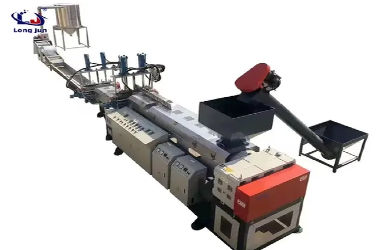
In this stage, the cleaned plastic is melted at high temperatures to transform it into a pliable form. Once melted, the plastic is fed into an extruder, a machine that shapes the plastic into long, continuous strands or filaments.
The extruder plays a key role by pushing the melted plastic through a die, where it is formed into uniform pellets or granules. These small, consistent shapes are ideal for further processing in manufacturing. The extrusion process ensures that the plastic is cooled and solidified into pellets that can be easily handled, stored, and used to create new products, making it a critical step in the recycling process.
After the plastic is melted and extruded, it is cooled and cut into small, uniform pellets. This is done using a pelletizer, a machine that slices the cooled plastic into consistent sizes, making it easier to handle and process in subsequent manufacturing stages. The pellets are typically cooled using water or air to solidify them before they are cut.
The resulting pellets are essential because they are the final form of recycled plastic, ready for use in creating new products. These uniform pellets can be used in the production of various plastic items, ranging from packaging materials to automotive parts. The consistency in pellet size ensures efficient handling and processing, making the material more reliable and cost-effective for manufacturers. By turning waste into usable pellets, this step contributes to a circular economy, promoting sustainability and reducing reliance on virgin plastic.
Once the recycled plastic has been pelletized, these pellets are used in the manufacturing of a wide range of new plastic products. Common applications include the production of containers, packaging materials, automotive parts, textiles, and even furniture. These pellets can be melted and molded into different shapes and sizes, depending on the requirements of the end product.
Using recycled plastic to create new products significantly contributes to sustainability. It reduces the need for virgin plastic, conserving natural resources and cutting down on energy consumption. By recycling plastic waste, manufacturers help reduce the environmental impact of plastic production, promote a circular economy, and minimize landfill waste. Recycled plastic is an essential material in creating eco-friendly products, supporting both environmental preservation and responsible manufacturing practices.
Plastic recycling machines can process a wide range of plastics, including PET (Polyethylene Terephthalate), HDPE (High-Density Polyethylene), PVC (Polyvinyl Chloride), and PP (Polypropylene). Each type of plastic has unique properties and requires different processing methods to ensure efficient recycling, as some plastics are more easily recycled than others due to their chemical composition and structure.
Washing is a critical step in the plastic recycling process as it removes contaminants such as dirt, oil, chemicals, and adhesives from labels. By cleaning the plastic thoroughly, it ensures that the final recycled material is free from impurities, which could affect the quality and usability of the new plastic products. A clean material also ensures better processing in the later stages, such as melting and extrusion.
Pelletizing is essential because it transforms the melted plastic into small, uniform pellets, which are much easier to handle, store, and process. These pellets have consistent sizes, which ensures that the plastic can be melted and molded evenly in subsequent manufacturing processes. This step also makes the recycled plastic more versatile and ready for use in a wide range of applications, from packaging to automotive parts.
Plastic recycling machines provide several significant environmental benefits. They help reduce the amount of plastic waste that ends up in landfills, oceans, and other ecosystems, lowering plastic pollution. By recycling plastic, these machines conserve natural resources, reduce the need for virgin plastic production, and minimize the energy consumption and carbon emissions associated with manufacturing new plastics. Recycling also supports a circular economy by transforming waste into valuable materials for new products, promoting long-term sustainability.
Plastic recycling machines play a crucial role in efficiently transforming waste plastic into valuable materials that can be reused in the production of new products. The process, from collection and sorting to pelletizing and final product creation, not only reduces the environmental impact of plastic pollution but also conserves natural resources and lowers carbon emissions. By streamlining each stage of recycling, these machines make the entire process faster, more cost-effective, and scalable, allowing for a greater volume of plastic waste to be processed. It’s clear that recycling is vital for sustainability, and we all have a part to play in reducing waste and promoting responsible production. Individuals and industries alike should invest in and support plastic recycling efforts, helping to create a cleaner, more sustainable future for our planet.


